Treatment Principles · 03 Custom MCB Splint

Custom
MCB Splint

An intraoral appliance designed with
the jaw joint and lower jaw function in mind

“MCB splint” is the name GSB Orthodontics uses for its jaw joint–related intraoral appliance and approach to care.
We assess the condition of the jaw joint, lower jaw movement, chewing muscle function and how the teeth meet as a whole, and use the appliance where needed.

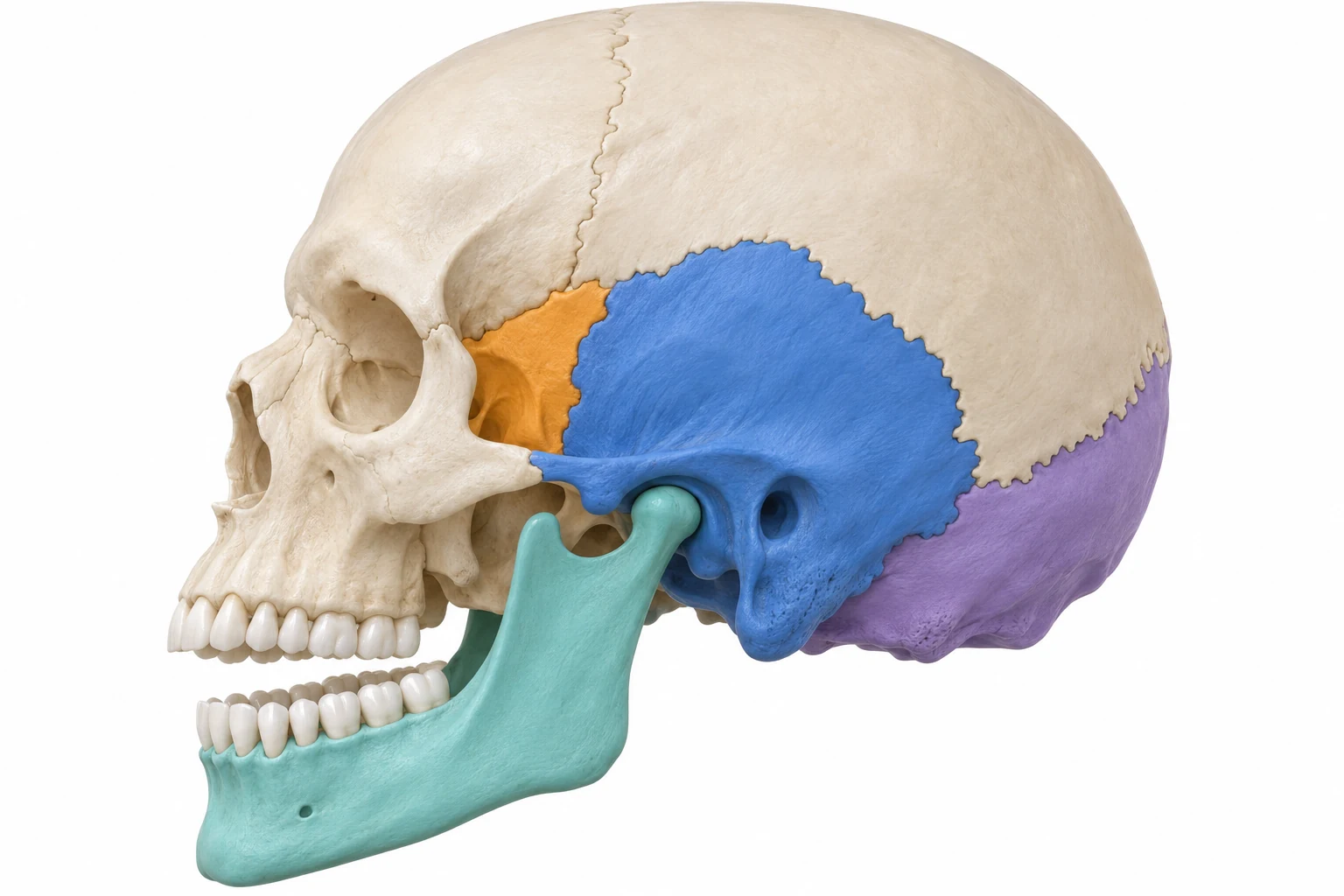
Position · Lower jaw and skullAnatomical model showing the connection between the lower jaw and the skull
Maintenance · Custom splint

MCB · Mandibular Cranial Balancing

We look at the position of the lower jaw and the balance of the skull together.

M

MandibularUsing the lower jaw

C

Cranialto bring balance

B

Balancingto the skull

01What is different

Beyond the trees,
we look at the forest too

Why an orthodontic specialist with 40 years of practice talks about the lower jaw. Looking at the same bite, what differs is how far you look.

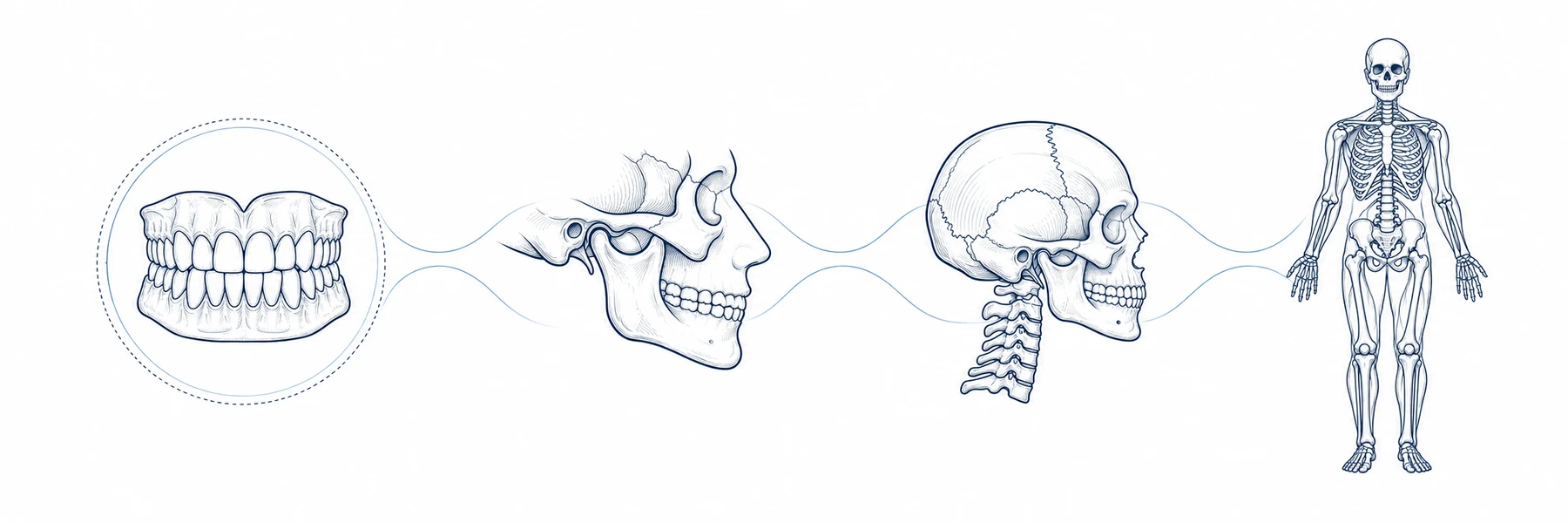
Illustration of the structures running from the teeth through the jaw joint and skull to the whole body
TreesConventional occlusion · Within the mouth
ForestMCB · Out to the whole body

TreesFour reference positions in conventional dental occlusion

  • TeethCentric occlusion C.OThe state in which the teeth fit together most fully
  • JointCentric relation C.RThe most stable relationship of the bones within the jaw joint
  • TeethMaximum intercuspal position MIPThe state in which the upper and lower teeth interlock like cogs with the most contact
  • MuscleNeuromuscular occlusion NMThe state in which the jaw muscles are most relaxed

All four are defined within the mouth (teeth, joint, muscle).

ForestOne more question MCB asks

“Where does the lower jaw need to be
for the whole skull and the body to find balance?”

On top of the references within the mouth, we also look at the movement of the skull and the symmetry of the body.

02What the MCB position is

The position where the teeth fit best and
the position where the skull is most at ease may differ

The position where the teeth fit most comfortably now may be one created by a habit of the jaw closing off to one side to avoid a tooth that touches first.

The position where the teeth habitually fit best now The jaw closes off to one side
to avoid a tooth that touches first
  • The jaw is off center
  • Muscle tension differs left and right

Every time the teeth touch, the same twisting tension may build up again.

The MCB position · Where the skull is most at ease The jaw closes straight,
toward the center
  • Jaw and skull in line
  • Even muscle tone left and right

It is a “physiological neutral point” that differs from person to person. Dr. Lee finds it for each patient individually, using measuring paper and his hands.

03How it is found

Observing the craniosacral rhythm
to find the position of the lower jaw

Dr. Lee changes the position of the lower jaw in very small steps while feeling the movement of the skull with his hands.
He looks for the position where the rhythm feels even and natural, and uses it as the reference for making the custom splint.

01 · Three-Dimensional Position of the Lower Jaw

Fine adjustments on a micron scale
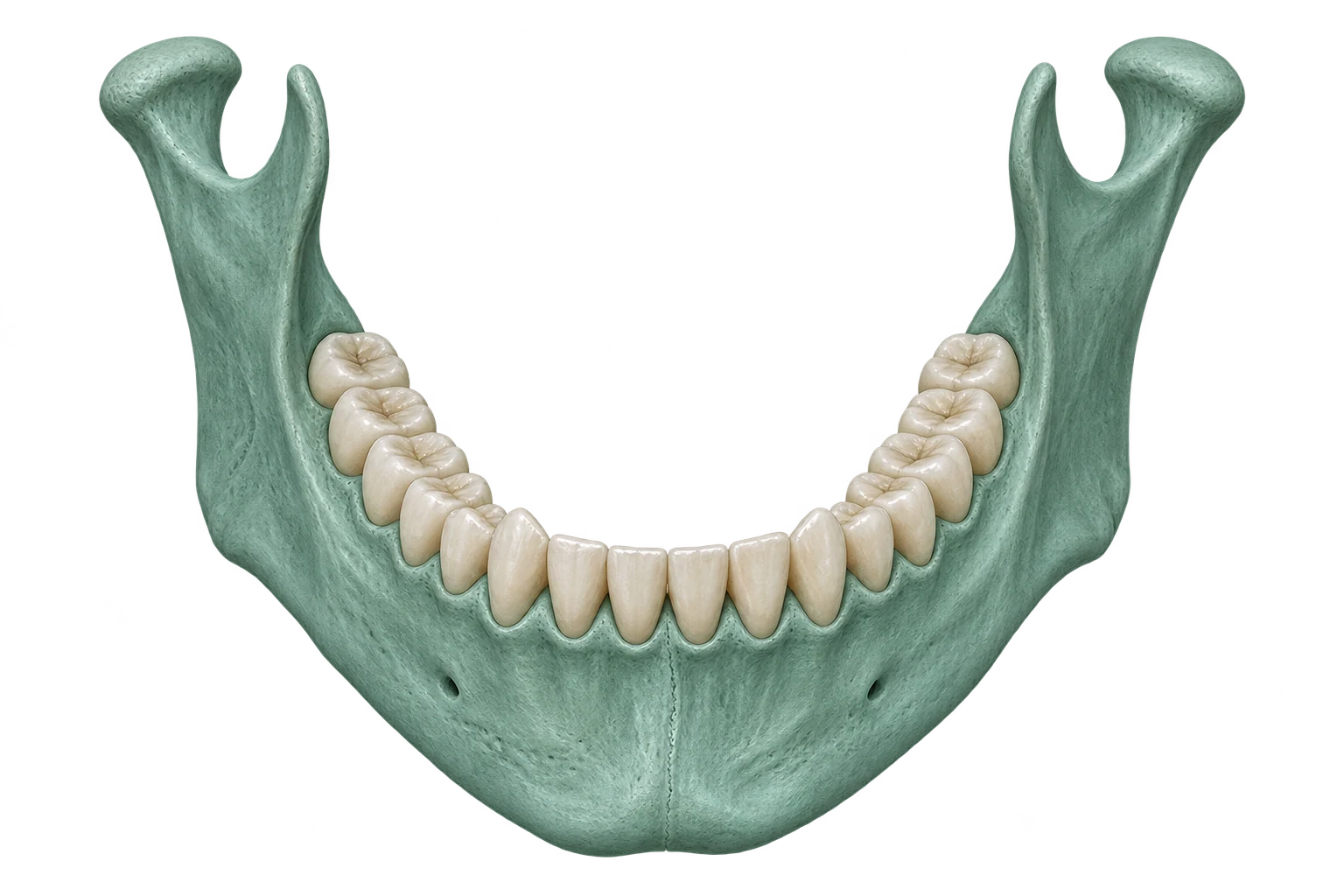
Anatomical model of the whole skull with the lower jaw separated
02 · Once a Position Is Found

Craniosacral rhythm

He adjusts the position of the lower jaw in small steps and checks the craniosacral rhythm.This is the process Dr. Lee uses in the clinic to find the jaw position.

What is the craniosacral rhythm?

Why the lower jaw acts as a lever

Using the lower jaw as a lever
to find the balance of the skull

In Dr. Lee’s view, misalignment of the skull pulls on the jaw joint and creates a tiny gap where the upper and lower teeth do not fully meet.

He therefore uses 0.1 mm measuring paper to fine-tune the height of support between the teeth while looking for the jaw position at which the movement of the skull feels even.

↓ From the top down

When the skull is out of alignment, a gap opens between the teeth

↑ From the bottom up

The force of the teeth touching travels up to the base of the skull

The skull is out of alignmentInjury · falls · long-standing posture
Anatomical illustration of the several skull bones and the lower jaw fitting togetherSkull
Sphenoid · temporal bonesThe base of the skull, where the force arrives
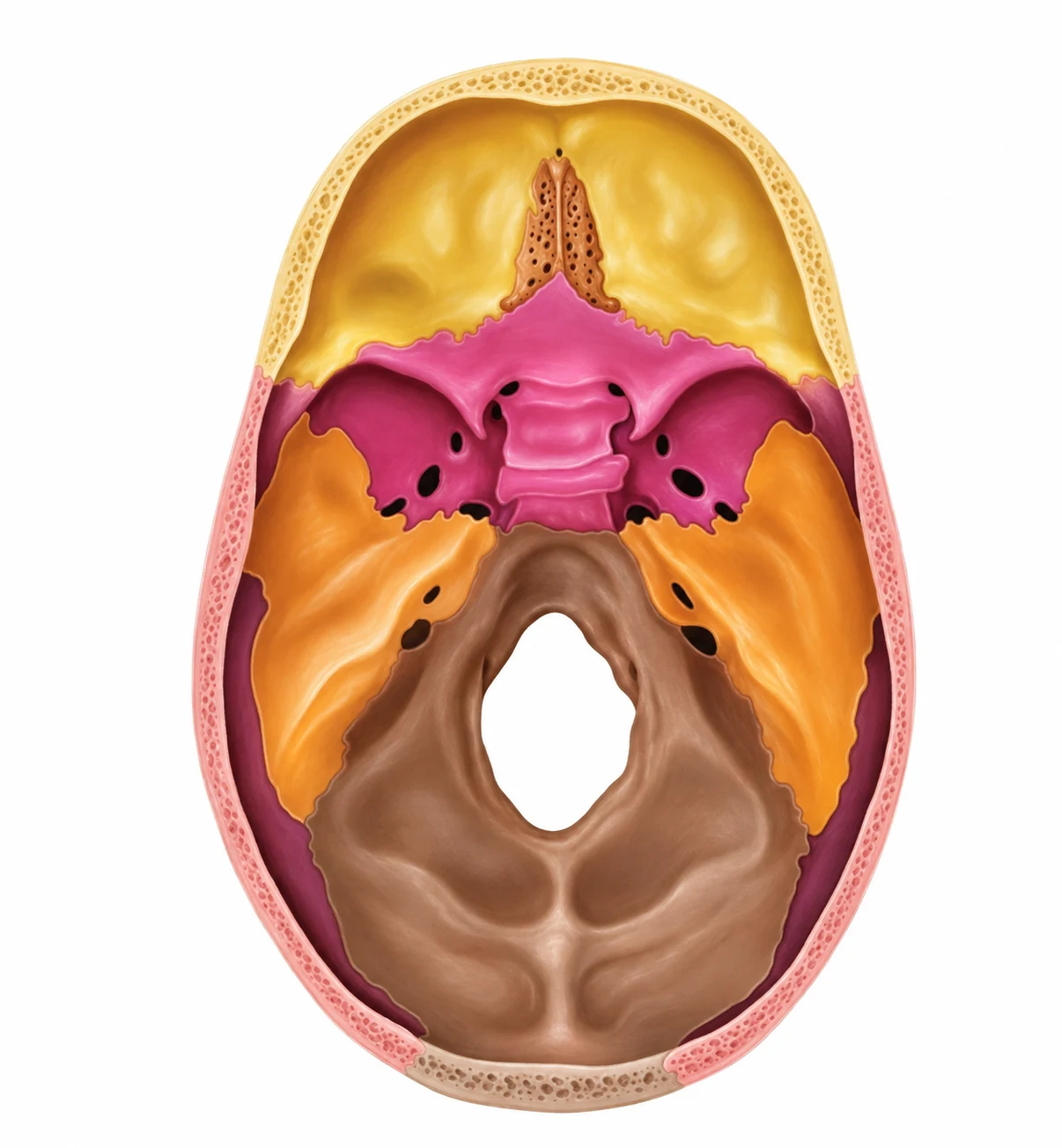
The bones of the base are under tensionSphenoid · temporal bones · occipital bone
Anatomical illustration of the base of the skull with the sphenoid, temporal and occipital bonesBase of the skull
Through the palatine bones and cheekbonesFrom the upper jaw bone to the skull
The jaw joint is pulledThe lower jaw hangs from the temporal bones
Jaw joint · upper jaw
Upper teeth → upper jaw boneThe upper teeth are set in the upper jaw bone
A small gap between the teethA spot where the teeth do not fully touch
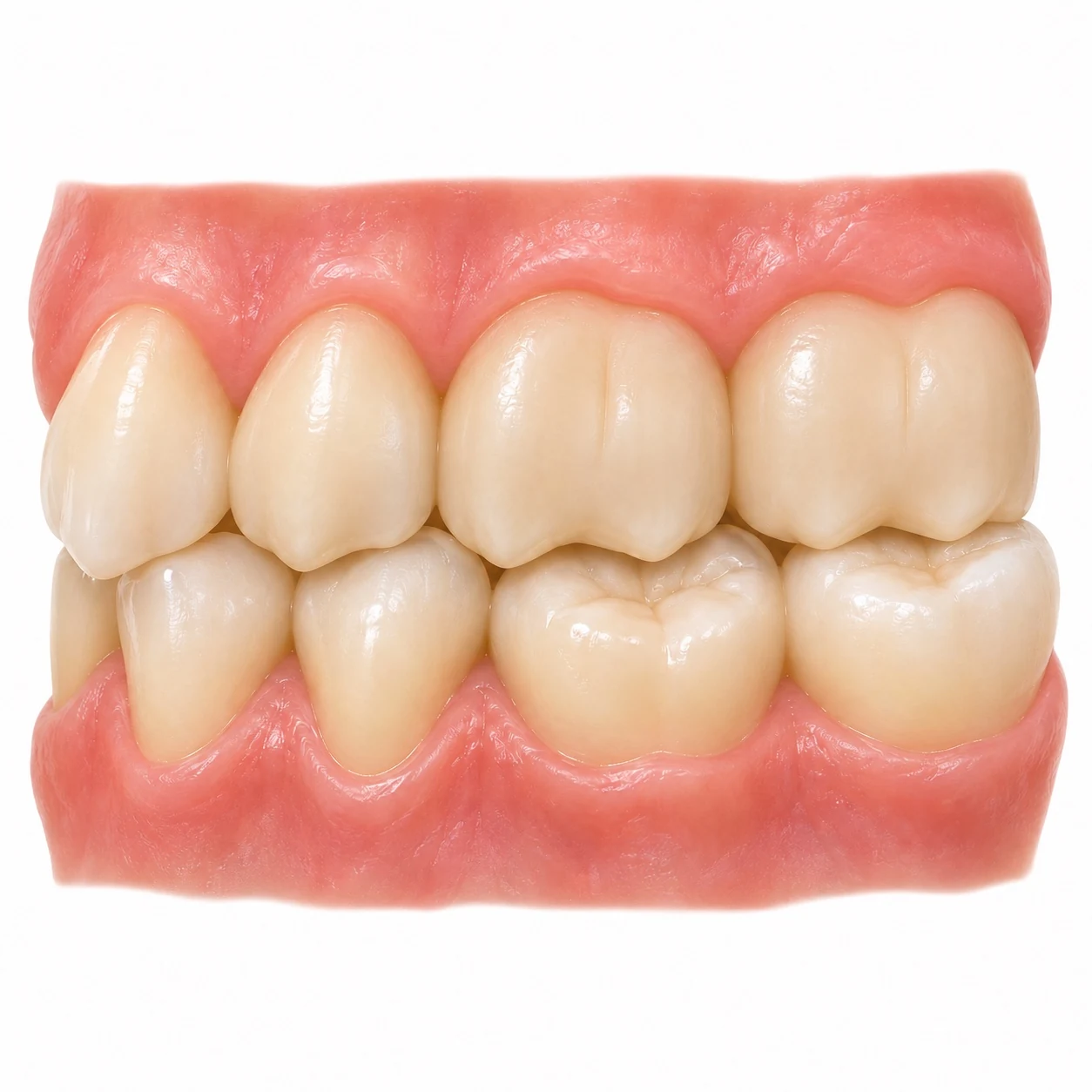
Illustration of molars showing the shape of the upper and lower teeth and how they meetUpper and lower teeth
The lower teeth touch the upper teethHundreds of times a day, every time you chew and swallow

04When the teeth touch in that position

Along the same trigeminal pathway,
a different signal travels

Before · When a tooth touches firstTrigeminal nerve sensitization
  1. A tooth that touches first
  2. The jaw moves away
  3. Uncomfortable signals build up and set in
① Why the Jaw Joint Matters
When the teeth touch in the MCB positionRecovery signal
  1. Contact in a balanced position
  2. Muscle tension is readjusted
  3. A new closing path is learned
0.05–0.2 secondsOne turn of the loop
1SensingRoot · joint · muscle
2Brainstem · cerebellumReadjusting
3Muscle controlEvenly left and right
★In the MCB positionThe teeth touch
  1. 1
    SensingThe ligament around the tooth roots, the jaw joint and the chewing muscles sense where and how contact was made.
  2. 2
    ReadjustingThe signal goes to the trigeminal nuclei, and the brainstem and cerebellum readjust the tension of the chewing muscles within 0.05–0.2 seconds.
  3. 3
    Even on both sides, learning a new pathThe side that had stiffened lets go of tension and, with repetition, learns the path of closing into that position.
  4. →
    To the neck, shoulders and bodyChanges in the jaw may carry over to the alignment of the head, neck and body.

The pathway by which sensation regulates the muscles through the nerves is grounded in anatomy and physiology; the changes seen in the MCB position are Dr. Lee’s observations. The degree of change varies from person to person.

Dr. Jinhaeng Lee

“The aim of MCB is to find a position where the lower jaw is comfortable
and help the body become accustomed to it.”

Dr. Jinhaeng Lee · GSB Orthodontics
Cranial Balancing Dentistry This is what Dr. Lee calls his approach: assessing the balance of the skull through the position of the lower jaw, and adjusting the teeth to meet in that position.
From the position found with the splint to the bite of your own teeth

Once jaw joint treatment has progressed to a certain point,
why is fine bite adjustment essential?

④ Fine Bite Adjustment