
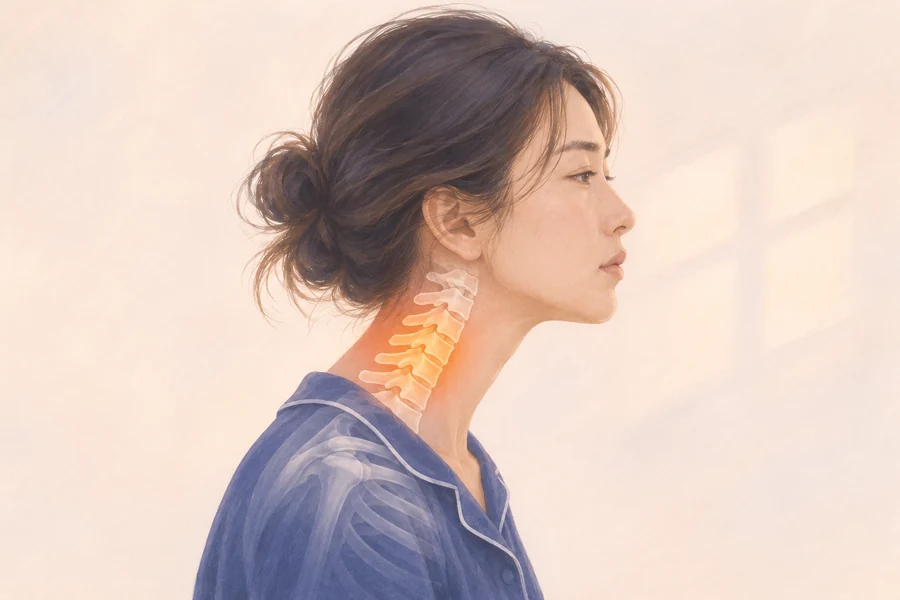
Body Pain

Do the stiffness and pain keep coming back
even after massage and manual therapy?

When your neck and shoulders stiffen up again,
notice whether jaw discomfort appears with it.

Pain can continue even when examinations of the spine and pelvis do not show a clear cause. At our clinic, when jaw pain or clenching is also present, we look at jaw joint movement, tooth contacts and irritation of the soft tissue in the mouth. Depending on the findings, we explain any dental treatment that is needed.

Book a Consultation ↗
A person in a quiet room pressing a hand between the back of the neck and the shoulder

01 · Symptom Check

From rock-hard neck and shoulders
to numbness in the buttock and leg

Start by keeping a record of when and where the pain begins. If you tell us, along with previous test results, whether jaw pain, clenching or difficulty chewing appears around the same time, it helps us decide what to check in the mouth.

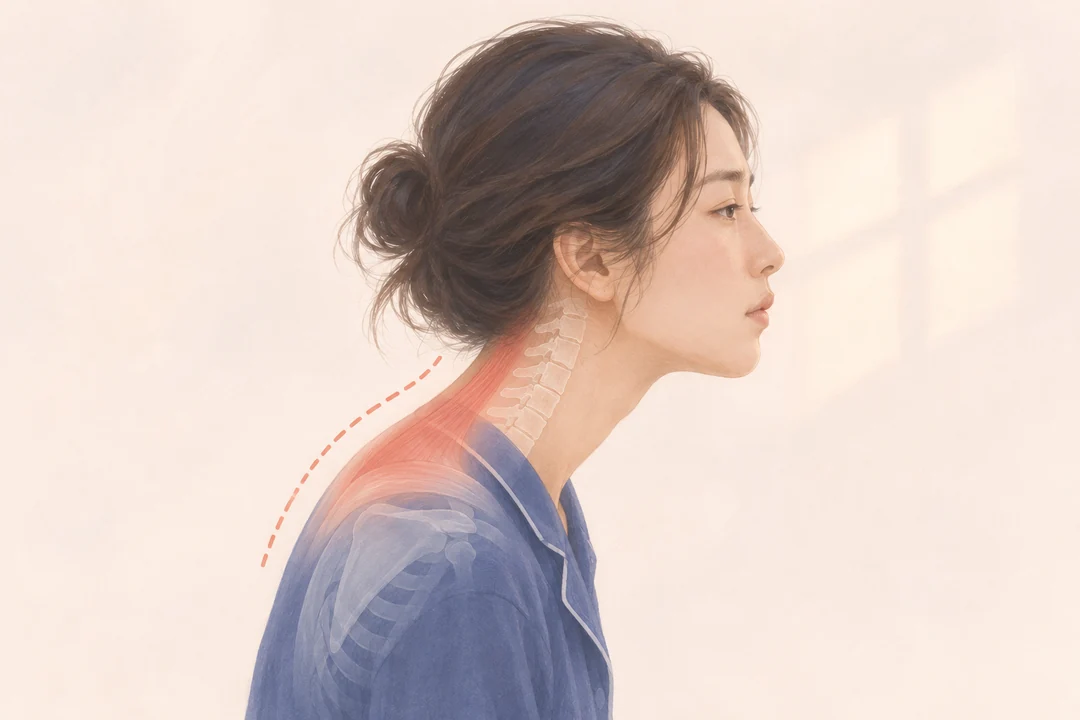
  • Recurring neck and shoulder stiffness and forward head posture

    Even after stretching or manual therapy, the back of the neck and the trapezius may knot up again, and you may feel your head drifting forward.

  • Muscle pain that moves around the body

    The back, lower back, arms and legs may ache in turn, and even light pressure on the skin may be acutely painful.

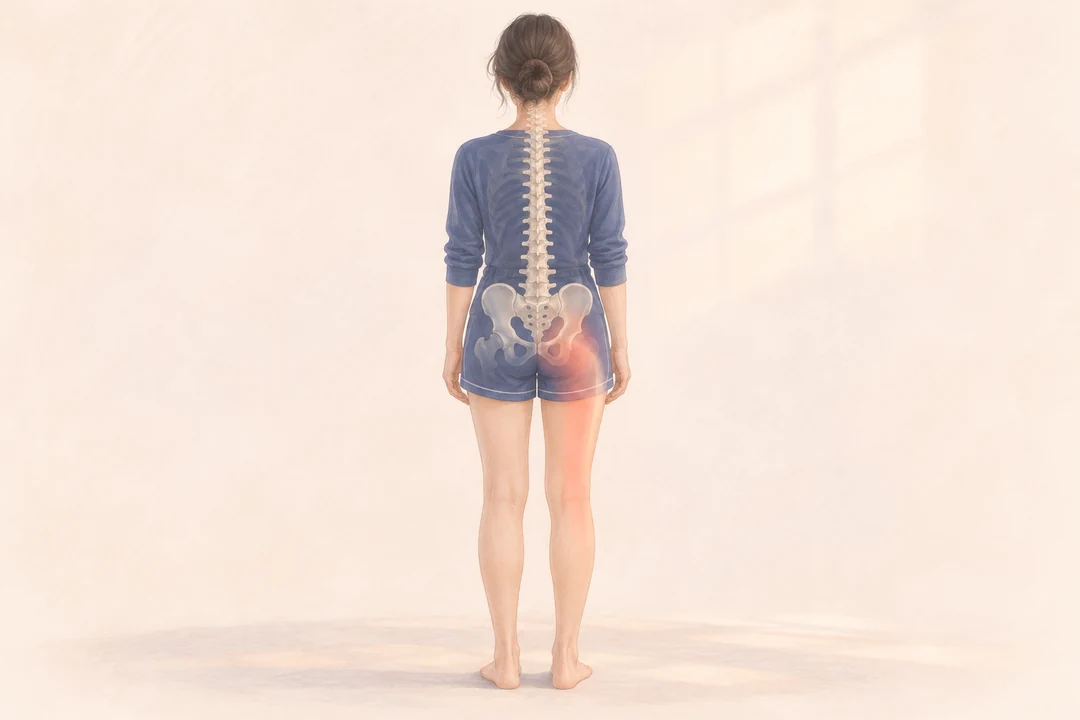
  • Discomfort around the pelvis and numbness in the buttock and leg

    One buttock may ache, or the back of the leg may feel numb. If the numbness recurs or gets worse, have it assessed by the relevant medical specialist.

  • Whole-body fatigue after sleep and signs in the mouth

    You may be tired even after enough sleep and your jaw may feel stiff, or you may feel a particular tooth touch first when you close your mouth and see tooth marks on your tongue or the inside of your cheek.

Side view with the head held forward, marking areas of tension in the neck and shoulders
Forward head posture and stiffness in the neck and shoulders
Drawing showing the spine and pelvis and areas of discomfort in one buttock and leg
Discomfort around the spine and pelvis and radiating pain

02 · Causes

We look at the jaw and neck muscles, the sensory nerves and sleep together

These are the three areas we check at a visit when jaw discomfort and body pain overlap. If you feel a tooth touching first or have recurring soft-tissue irritation, we examine that area.

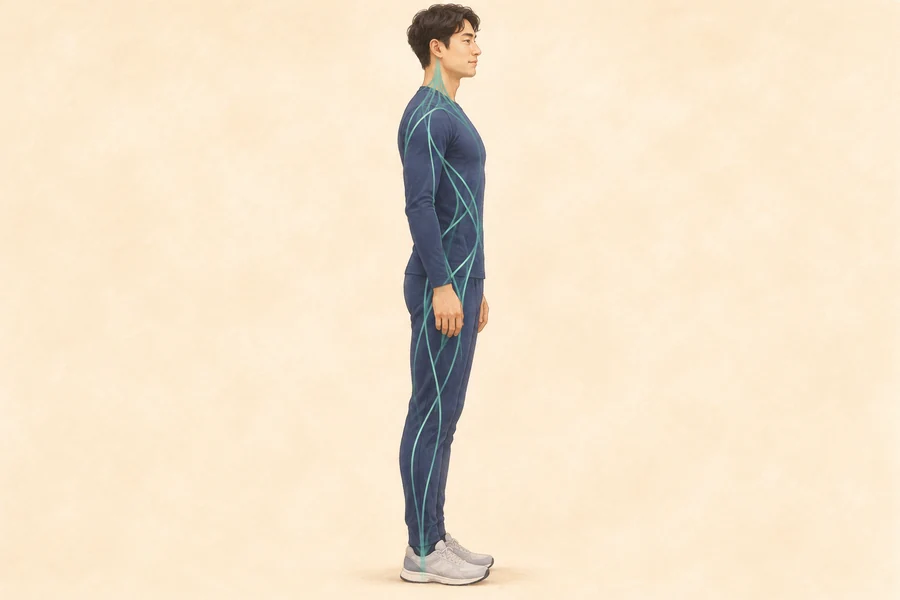
  1. Diagram representing the connective tissue of the whole body

    01Fascia and postureMuscle tension around the jaw and neck

    The muscles around the jaw and neck work together in chewing, speaking and holding posture. If you tend to keep your head bent for long periods or to clench your teeth, we look at when your neck, shoulders and jaw become stiff together.

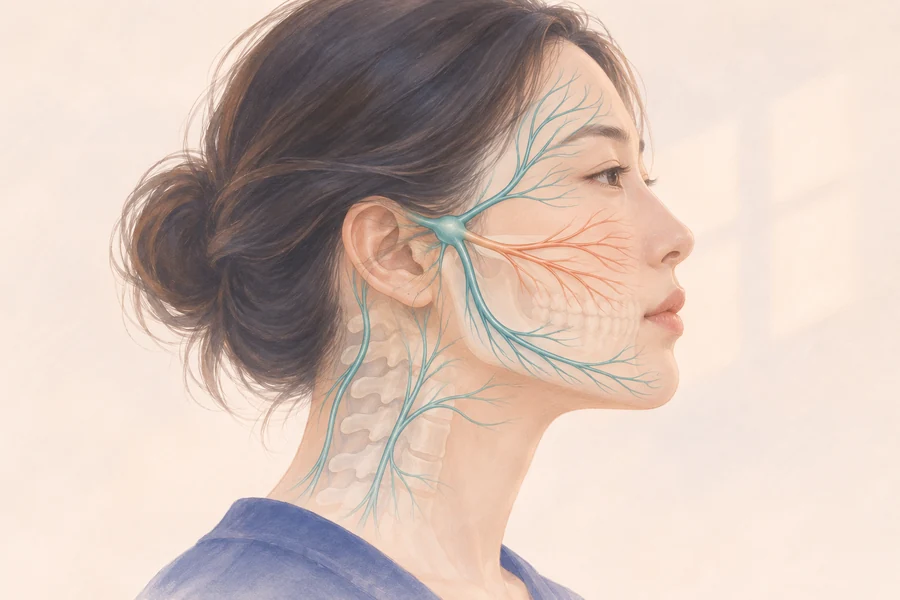
  2. Simplified diagram of the sensory nerves of the face and upper neck

    02Sensory nervesPain felt in both the jaw and the neck

    Some sensory signals from the face and the upper neck can be carried along the same pathway in the brainstem. When pain lasts a long time, some people become more sensitive to stimuli, so we assess the location and course of the pain as a whole.

  3. Drawing of a sleeping person and arousals during sleep

    03Overnight recoveryBroken sleep and morning fatigue

    If your sleep is often interrupted, you can feel tired even after enough hours in bed. If your jaw is stiff in the morning, we check for teeth grinding during sleep, and if snoring, pauses in breathing or daytime sleepiness are also present, a sleep assessment is considered.

03 · Problems That Can Develop

From the neck and lower back to numbness in the legs and fatigue after sleep

When discomfort appears in several areas together, we look at the symptoms in each area and when they began. If jaw pain or difficulty chewing is also present, a jaw joint assessment can be considered as well.

Diagram showing a forward head posture and the cervical vertebrae

① Military neck (straight neck), forward head posture and cervical discomfort

Holding the head forward for long periods can make the neck and shoulder muscles tire easily. If you have pain or numbness spreading into the arm, or loss of strength, the cervical spine and nerves are assessed separately.
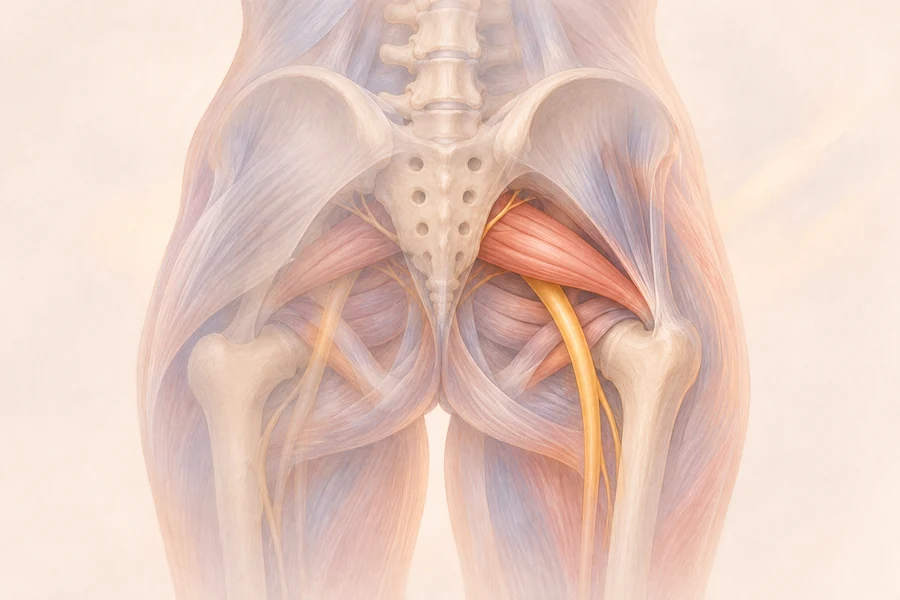

Diagram showing the muscles at the back of the pelvis and the sciatic nerve

② Pain around the pelvis and sciatic nerve symptoms

Pain or numbness running from the buttock down the back of the leg can be related to several causes in the lower back or around the pelvis. An examination identifies where the nerve is being irritated, including the area around the piriformis.

Drawing marking several areas of pain in the neck, back, lower back, arms and legs

③ Widespread myofascial pain and pain resembling fibromyalgia

When several areas of the neck, back, lower back, arms and legs hurt for a long time, the pattern of pain in the muscles and surrounding tissue is checked. When widespread pain overlaps with fatigue and sleep problems, several possibilities including fibromyalgia are assessed by the relevant medical specialist.

A person sitting on the bed in the morning, feeling fatigued

④ Nonrestorative sleep, chronic fatigue and brain fog

If your whole body feels heavy and it is hard to concentrate even after sleeping, keep a record of how long you sleep, how often you wake, and any snoring and daytime sleepiness. If fatigue persists, sleep and general health need to be looked at together.

04 · Limits of Conventional Approaches

If the pain keeps coming back even after the muscles are released or the pelvis is corrected

Looking at which treatments helped and how much, and at the circumstances in which the pain returned, makes it easier to decide what to assess at your next visit.

Limits of pain injections, pain relievers and muscle relaxants

Illustration of a syringe and a vial

Trigger point injections, pain relievers and muscle relaxants can help relieve symptoms, depending on the diagnosis. If pain keeps recurring, discuss your progress with the clinician who prescribed them, and let them know if you also have jaw pain or difficulty chewing.

Limits of manual therapy, Chuna or pelvic correction alone

Illustration of a clinician examining the neck and shoulders of a seated patient

If you feel better after manual therapy or Chuna and then become uncomfortable again, keep a record of the postures and activities in which the pain returns. The neck, lower back and pelvis can be checked by the relevant medical specialists, and jaw joint and oral symptoms by a dentist.

05 · Treatment at Our Clinic

Two treatment plans to fit your visit schedule

We assess where the teeth meet, how the jaw moves and irritation of the soft tissue in the mouth together.
If an appliance is needed, we choose one in light of the examination findings and your availability for visits. Fine bite adjustment is discussed when a separate dental need has been confirmed.

If long-term treatment is possible

Custom MCB Splint

+ Fine bite adjustment if needed

MCB-H · For in-clinic treatment
MCB-L · For sleep

We assess your jaw position and tooth contacts and make a custom MCB splint. At regular visits, we check jaw movement, the bite and the course of neck and shoulder discomfort, and continue with any appliance adjustments needed.

More about custom MCB treatment ↗

If long-term treatment is difficult right now

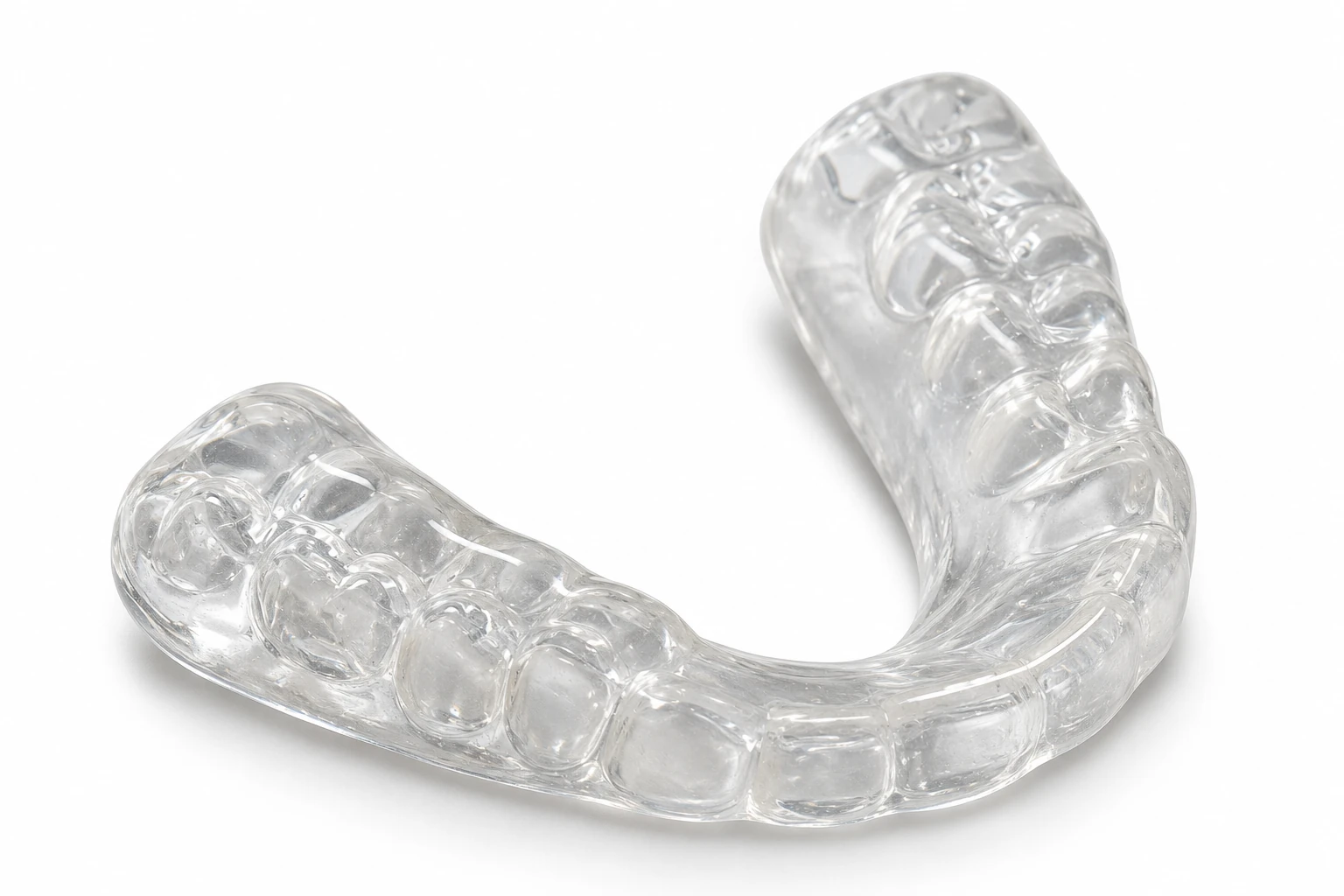
Thermo Splint

+ Fine bite adjustment if needed

Clear thermoplastic Thermo splint

We make a thermoplastic Thermo splint to fit the shape of your teeth. We explain how long to wear it and what to watch for during use, and set the next checkup around your availability.

More about the Thermo splint ↗

06 · Everyday Habits

Everyday habits to ease tension in the jaw, neck and shoulders

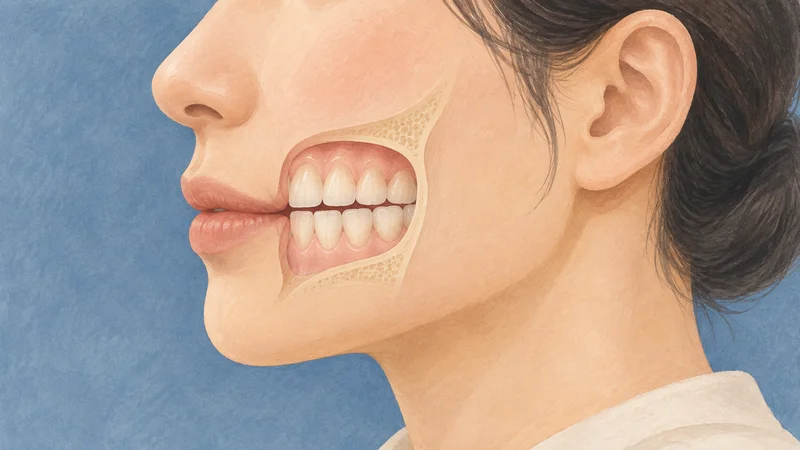
  1. A relaxed jaw with the upper and lower teeth slightly apart

    Keep your upper and lower teeth slightly apart

    When you are working or driving, notice whether your upper and lower teeth are pressed together. When you are not using your teeth, relax your jaw and keep them slightly apart.

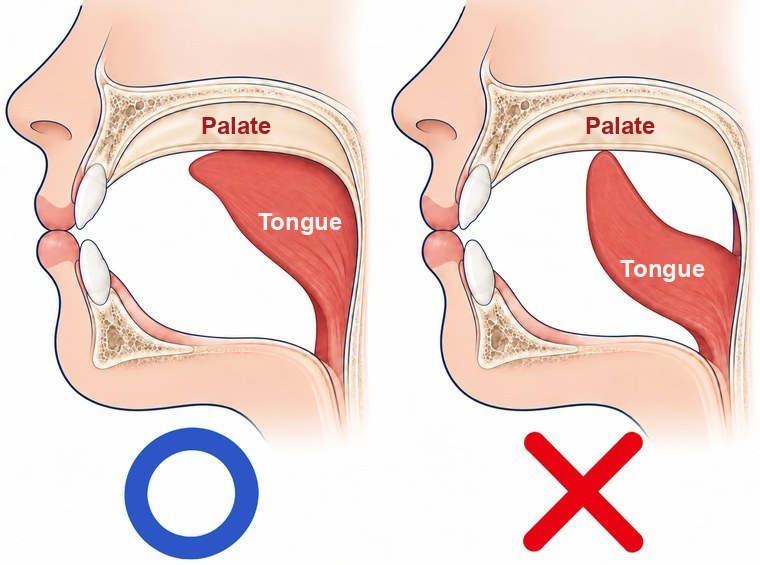
  2. Drawing comparing where the tongue touches the roof of the mouth

    Rest your tongue comfortably against the roof of your mouth

    Rest your tongue comfortably against the roof of your mouth without tensing it. There is no need to push against your front teeth with the tip of your tongue or to force it to stay in an uncomfortable position.

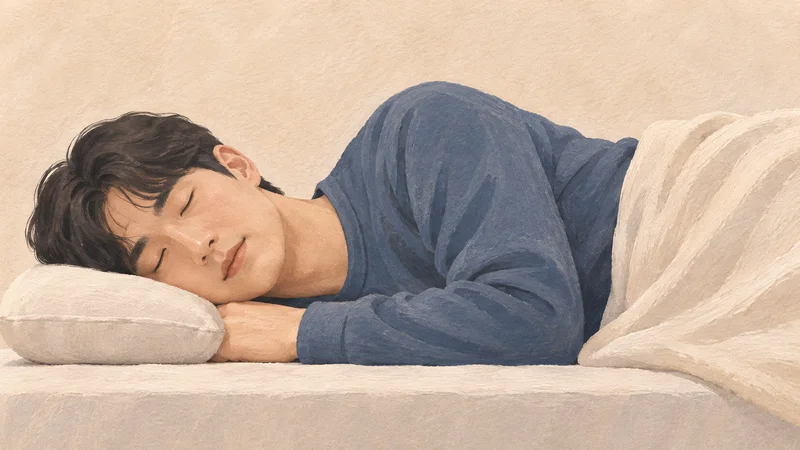
  3. Drawing of a pillow comfortably supporting the head and neck

    Cut down on chewing on one side, resting your chin on your hand and crossing your legs

    Notice whether you are holding a posture that loads one side for long periods. Change your sitting position often, and keep a record of the situations in which an uncomfortable posture recurs.

  4. Drawing of a warm towel resting lightly around the jaw

    Warm compress on the jaw and back of the neck before bed

    Apply a warm towel that is gentle on the skin around the jaw and the back of the neck for about 10 minutes and let the tension ease. Stop if it is uncomfortable or the pain gets worse.

Book a Consultation Call Us +82-2-3661-2211